

Homeowners in the Sonoran Desert face unique challenges when it comes to maintaining their property. The intense heat and UV exposure accelerate the degradation of building materials, making window integrity a critical component of home comfort. According to recent industry data, approximately 30% of residential window failures in arid climates are directly linked to sealant breakdown rather than structural damage. This statistic highlights the importance of early detection. When a window seal fails, it compromises energy efficiency, invites pests, and reduces the aesthetic value of your home. Understanding these warning signs allows you to address issues before they escalate into costly replacements. (About Vista Glass)
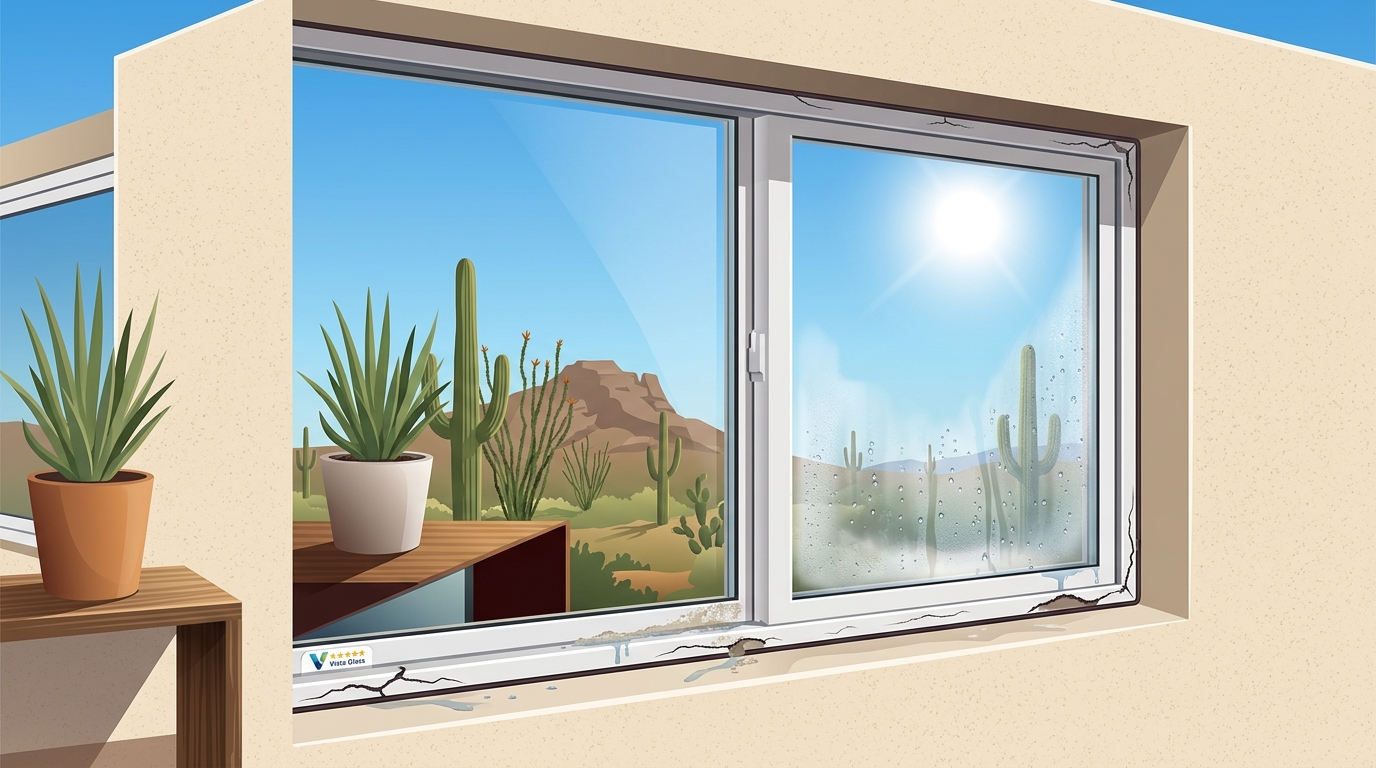
Foggy or Cloudy Glass Between Panes
The most immediate and undeniable sign of a failing window seal is the appearance of fog, mist, or condensation trapped between the glass panes. This phenomenon occurs because the insulating glass unit (IGU) is designed to be hermetically sealed to maintain a dry, inert gas fill, typically argon or krypton. When the sealant fails, moisture from the outside air penetrates the unit. Insulating glass unit failure is the process where the barrier between glass panes breaks, allowing ambient humidity to enter the sealed space. (Location Vista Glass)
In Tucson, the extreme temperature swings between day and night exacerbate this issue. The glass expands and contracts, putting stress on the sealant over time. Once the seal is compromised, the trapped moisture cannot escape. This fogging is not surface condensation that wipes away; it is permanent and indicates that the thermal performance of the window is already degraded. If you notice this cloudiness, the window has lost its insulating capability.
Moisture Accumulation and Condensation
While surface condensation can occur during high humidity, persistent moisture accumulation on the interior or exterior surfaces of the glass, particularly near the edges, suggests a seal failure. This moisture can lead to mold growth on the window frame and surrounding wall structures. Condensation is the physical change of water vapor into liquid water, often occurring when warm, moist air contacts a cooler surface like a failing window pane.
For homeowners in Pima County, this is a critical concern. Excess moisture can rot wooden frames, damage drywall, and create unhealthy indoor air quality. If you see water droplets forming consistently at the bottom of the window glass or along the edges, the seal is likely broken. This is not merely an aesthetic issue but a structural one that requires professional assessment to prevent further damage to your home's interior.
Drafts and Temperature Fluctuations
One of the primary functions of a sealed window is thermal regulation. When the seal fails, the insulating gas escapes and is replaced by regular air, which has lower insulating properties. This leads to noticeable drafts and uneven temperatures in your home. You might feel a cold breeze near the window in winter or excessive heat in the summer. Thermal inefficiency is the reduction in a window's ability to resist heat flow, often caused by the loss of insulating gas due to seal failure.
Homeowners often report higher energy bills without a change in usage patterns. This is a direct result of your HVAC system working harder to compensate for the lost insulation. In Tucson, where cooling costs are significant, a failing window seal can have a measurable impact on your utility bills. If you notice your AC running constantly or rooms feeling significantly different in temperature, the window seal is a likely culprit.
Visible Frame and Sealant Degradation
Inspecting the physical condition of the window frame and the visible sealant can reveal early signs of failure. Look for cracks, gaps, or shrinkage in the caulking around the window frame. The sealant acts as the first line of defense against moisture and air infiltration. Sealant degradation is the breakdown of the material used to seal gaps, often caused by UV exposure and thermal cycling, leading to loss of adhesion.
In the harsh desert sun, UV rays can break down the chemical bonds in silicone or latex caulking. If the caulking is brittle, cracked, or pulling away from the frame, moisture can easily penetrate the window assembly. Additionally, check for warping or discoloration of the window frame itself. Aluminum frames may show signs of oxidation, while vinyl frames might become brittle. These physical signs often precede the internal fogging mentioned earlier.
Increased Noise Penetration
Another subtle but significant sign of a failing window seal is an increase in outside noise. Sealed windows provide a degree of soundproofing. When the seal breaks, the integrity of the glass unit is compromised, allowing sound waves to pass through more easily. If you suddenly notice more traffic noise, wind, or neighborhood sounds, the window may no longer be providing adequate acoustic insulation.
This is particularly relevant for homes in busy areas of Tucson. The loss of soundproofing is often a secondary symptom, but it indicates that the window is no longer performing as a complete barrier. Addressing the seal issue can restore both thermal and acoustic comfort to your living spaces. Professional technicians can assess whether the noise issue is due to seal failure or other structural factors.
Repair vs. Replacement Analysis
When you identify these signs, the next step is determining whether to repair or replace the window. In many cases, if the seal has failed, the entire insulating glass unit must be replaced. However, in some instances, the frame may still be in good condition. Insulating glass unit replacement is the process of swapping out the sealed glass assembly while retaining the existing window frame, often restoring thermal performance.
| Factor | Seal Repair/IGU Replacement | Full Window Replacement |
|---|---|---|
| Cost | Lower upfront cost | Higher upfront cost |
| Duration | Quick, often same-day | Longer installation time |
| Frame Condition | Requires good frame | Addresses frame issues |
| Energy Efficiency | Restored to original | Can be upgraded |
Vista Glass offers comprehensive assessments to determine the best course of action. We evaluate the frame condition, the extent of the seal failure, and your specific energy goals. Our team ensures that you receive a solution that balances cost-effectiveness with long-term performance.
Key Takeaways
- Fog or condensation between glass panes is the primary indicator of seal failure.
- Insulating glass unit failure allows moisture to enter, permanently degrading visibility.
- Drafts and higher energy bills signal a loss of thermal efficiency in your home.
- UV exposure in Tucson accelerates the degradation of window sealants and caulking.
- Condensation is the conversion of water vapor to liquid, often trapped by failed seals.
- Sealant degradation leads to gaps that allow air and moisture infiltration.
- Vista Glass has served Cochise and Pima County since 2000 with expert glass services.
Frequently Asked Questions
Can a failed window seal be repaired?
Typically, the seal itself cannot be repaired. The standard solution is to replace the insulating glass unit within the existing frame. In some cases, if the frame is also damaged, a full window replacement is necessary.
How long do window seals last in Tucson?
Window seals generally last between 10 to 20 years. However, the intense UV exposure and temperature fluctuations in Tucson can shorten this lifespan, leading to earlier failure.
Is fog between panes permanent?
Yes, fog trapped between the panes is permanent because it is sealed inside the unit. It will not clear up with cleaning or temperature changes.
Does a failed seal affect home value?
Yes, failing window seals can reduce home value by indicating poor maintenance and leading to higher energy costs. Prospective buyers often view this as a significant repair item.
What is the cost of replacing a window seal?
The cost varies based on window size and type. However, replacing the glass unit is often more cost-effective than full window replacement if the frame is in good condition.
Can I replace the glass myself?
While DIY is possible, it requires precision to ensure the new unit is properly sealed. Professional installation ensures warranty coverage and optimal performance.
Why does my window fog up only in the morning?
This may indicate surface condensation due to temperature differences rather than a failed seal. However, if it persists or is between panes, it is likely a seal issue.
Contact Vista Glass for Expert Service
If you suspect your windows are failing, do not wait for further damage. Vista Glass provides professional window repair and replacement services tailored to the unique needs of Tucson homeowners. Our team is fully licensed, bonded, and insured, ensuring peace of mind with every service call. We offer 24/7 emergency service for urgent glass issues. Contact us today to schedule an inspection and restore your home's comfort and efficiency.
Call us at 520-744-7766 or visit our Contact Us page to get started. Trust Vista Glass for quality you can count on.