
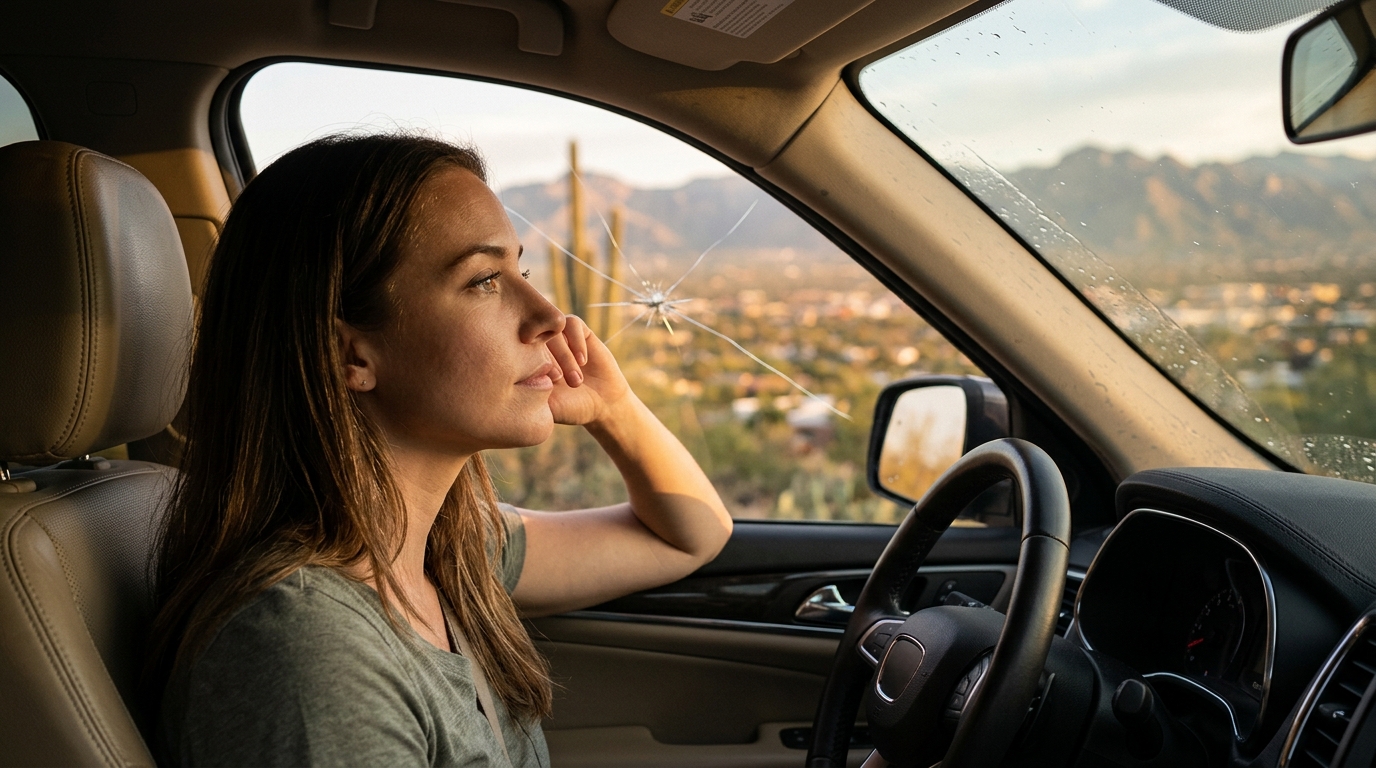
Driving with a compromised windshield is not just an annoyance, it is a critical safety hazard. According to the National Highway Traffic Safety Administration, windshield-related crashes result in thousands of fatalities annually, highlighting the urgent need for proper glass maintenance. When a crack appears, the immediate question is always whether the damage can be salvaged or if a full replacement is mandatory. Understanding the technical limits of glass repair is essential for vehicle owners in Tucson and surrounding areas to make informed, cost-effective decisions without compromising safety. (About Vista Glass)
Diagnostic Parameters for Damage Assessment
Before contacting a professional, you must accurately assess the extent of the damage. Not all cracks are created equal, and the geometry of the fracture dictates the viability of a repair. The primary factor is the size of the impact point. Generally, chips smaller than a quarter and cracks shorter than three inches are prime candidates for repair. However, this rule has strict exceptions based on the location and depth of the damage.
Another critical diagnostic parameter is the type of damage. A bullseye is a circular chip caused by a round object, like a stone, hitting the glass. A star break features cracks radiating outward from the impact point like a star. Both of these are often repairable if they meet size constraints. Conversely, a combo break involves both a chip and a long crack, which significantly reduces the likelihood of a successful repair.
The location of the damage is equally important. If the crack extends into the driver's direct line of sight, repair is often discouraged. This is because the resin used in repairs can leave a slight optical distortion, which may impair visibility and create new safety hazards. Furthermore, damage located at the very edge of the windshield compromises the structural integrity of the glass bond to the vehicle frame, making replacement the only safe option.
The Windshield Repair Process Explained
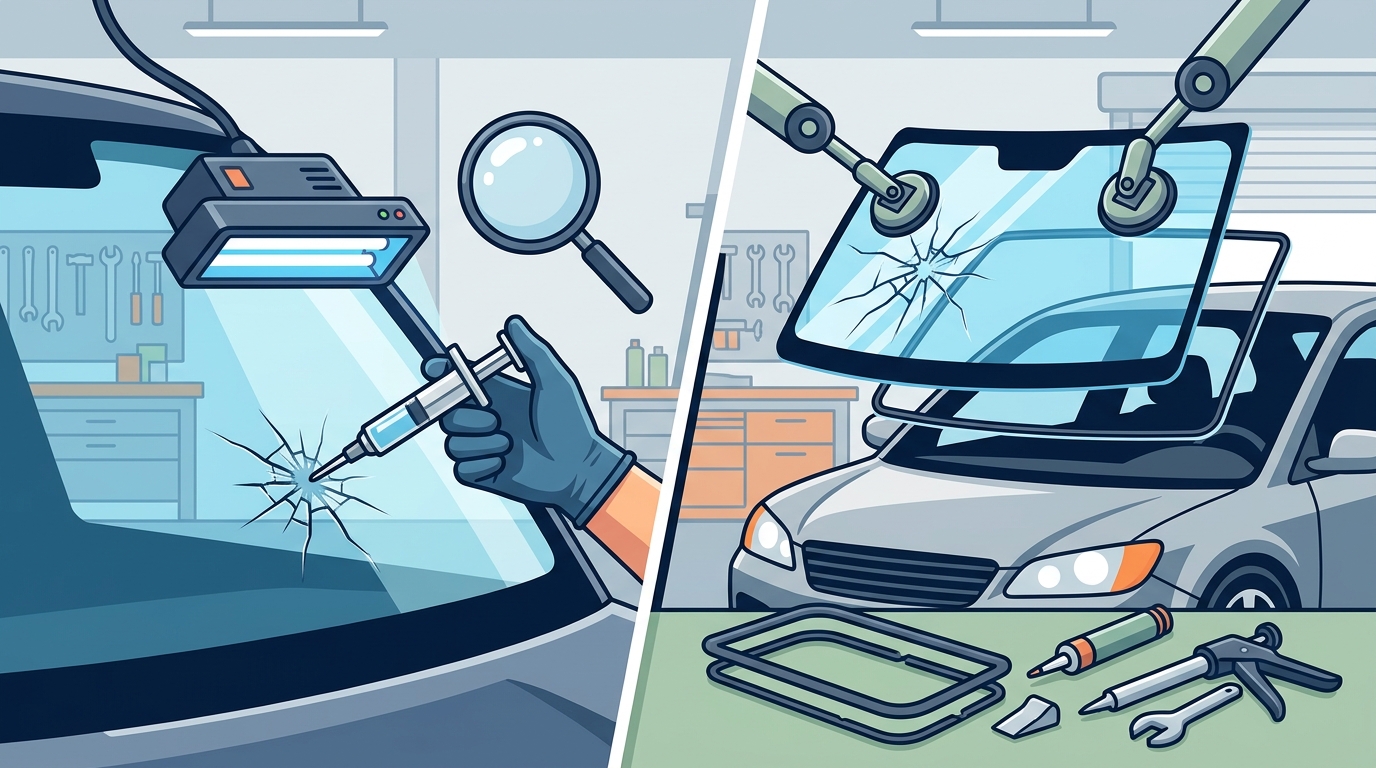
Windshield repair is a precise engineering procedure designed to restore structural integrity and optical clarity. The process begins with cleaning the damaged area to remove any debris or moisture. Technicians then create a vacuum seal over the chip or crack to prepare the glass for resin injection.
Next, a specialized high-clarity resin is injected into the fracture. This resin is formulated to have a refractive index similar to that of automotive glass, ensuring that the repair becomes nearly invisible to the naked eye. The resin fills the void left by the crack, bonding the glass layers back together. This step is crucial because it prevents the crack from spreading due to temperature changes or road vibrations.
Once the resin is fully injected, the area is cured using ultraviolet light. This hardens the resin instantly, locking it in place. The final step involves polishing the surface to remove any excess resin and restore smoothness. When performed correctly, this process can restore up to 95% of the original strength of the windshield. For more details on our specific repair methodologies, you can visit our Windshield Repair service page.
When Replacement Is Mandatory
There are specific scenarios where repair is impossible or unsafe. In these cases, a full windshield replacement is the only viable solution. Understanding these indicators can save you time and prevent further damage to your vehicle.
1. Length of the Crack: If the crack exceeds three inches, the structural compromise is too severe for resin to bridge effectively. The tension in the glass will likely cause the repair to fail or the crack to continue spreading.
2. Depth of the Damage: Modern windshields are laminated, consisting of two layers of glass with a plastic interlayer. If the crack penetrates through both layers of glass, the structural bond is broken. Repair can only address surface-level damage. For comprehensive Windshield Replacement services, our team ensures a factory-seal fit.
3. Edge Damage: Cracks that start or extend to the edge of the windshield weaken the entire panel. The edge is critical for holding the glass in place during a collision. Replacing the glass restores this critical safety feature.
4. Multiple Damages: If there are multiple chips or cracks in the same windshield, repair may not be cost-effective or structurally sound. Most manufacturers recommend replacement if there is more than one significant damage point.
5. Sensor Interference: Modern vehicles often have Advanced Driver Assistance Systems (ADAS) cameras mounted behind the windshield. If the damage is in the camera's field of view, replacement is necessary to ensure proper calibration and functionality of safety features like lane departure warning and automatic emergency braking.
Repair vs. Replacement Comparison
Choosing between repair and replacement can be confusing. The table below outlines the key differences to help you make an informed decision based on your specific situation.
| Factor | Windshield Repair | Windshield Replacement |
|---|---|---|
| Cost | Low (Often covered by insurance) | High (May involve deductible) |
| Time Required | 30 to 60 minutes | 1 to 2 hours |
| Damage Size Limit | Chips under 1 inch, cracks under 3 inches | No size limit |
| Structural Integrity | Restored to ~95% | Restored to 100% |
| Optical Clarity | Nearly invisible, minor distortion possible | Perfect clarity |
| Best For | Small chips, bullseyes, star breaks | Long cracks, edge damage, deep fractures |
For a deeper understanding of the materials we use, explore our Glass Replacement resources. We prioritize quality materials to ensure longevity and safety.
Key Takeaways
- Act Quickly: Small chips can expand into large cracks due to temperature fluctuations and road vibrations. Early intervention is key.
- Size Matters: Generally, cracks under three inches and chips under one inch are repairable. Anything larger usually requires replacement.
- Location is Critical: Damage in the driver's line of sight or at the edge of the glass often necessitates replacement for safety reasons.
- Insurance Coverage: Many insurance policies cover windshield repair with zero deductible. Check your policy before paying out of pocket.
- Professional Assessment: Always consult a certified technician. What looks like a simple chip may have hidden depth or structural implications.
- ADAC Calibration: If your vehicle has cameras, replacement requires recalibration to ensure safety systems function correctly.
- Local Expertise: Vista Glass has served Cochise and Pima County for over two decades, providing reliable emergency services.
Frequently Asked Questions
How long does a windshield repair take?
A standard windshield repair typically takes between 30 to 60 minutes. This includes the time needed for resin injection, curing with UV light, and polishing. Replacement takes longer, usually 1 to 2 hours, due to the removal of the old glass and curing of the new adhesive.
Can I drive with a cracked windshield?
While you can physically drive with a cracked windshield, it is unsafe. The crack can obstruct your view and weaken the structural integrity of the vehicle. In the event of an accident, a compromised windshield may not support the roof or deploy airbags correctly. It is best to address the issue immediately.
Does insurance cover windshield repair?
Most comprehensive auto insurance policies cover windshield repair with little to no deductible. This is because repair is significantly cheaper than replacement and prevents further damage. It is advisable to contact your insurance provider before proceeding.
What is the difference between a chip and a crack?
A chip is a small, localized area of damage where the glass has been impacted, often appearing as a circle or star. A crack is a linear fracture that extends from the impact point. Chips are more likely to be repairable, while long cracks often require replacement.
How do I know if my windshield needs replacement?
If the crack is longer than three inches, penetrates both layers of glass, or is located at the edge of the windshield, replacement is necessary. Additionally, if the damage is in the driver's direct line of sight, replacement is often recommended to avoid optical distortion.
Can temperature changes affect my cracked windshield?
Yes. Temperature fluctuations cause the glass to expand and contract. This stress can cause a small chip to rapidly expand into a large crack. Parking in the shade or using a sunshade can help mitigate this, but prompt repair is the best solution.
Is Vista Glass licensed and insured?
Yes, Vista Glass is fully licensed, bonded, and insured. We provide 24/7 emergency service for residents in Tucson and surrounding areas, ensuring you can get help whenever you need it.
Schedule Your Service
Do not wait for a small chip to become a major crack. Protect your safety and your vehicle's integrity by contacting Vista Glass today. Our expert technicians are ready to assess your damage and provide the best solution, whether it is a quick repair or a full replacement. Call us at 520-744-7766 or visit our Contact Us page to schedule an appointment. We are committed to providing top-notch service with a focus on quality and customer satisfaction.